
You reach for the countertop a little more than you used to. Or maybe you stepped off a curb last month, felt your ankle roll, and caught yourself just in time—but the moment stuck with you. If your sense of balance feels less dependable than it once did, you are not imagining it, and you are not alone. Balance naturally becomes harder to maintain with age, and for many people this is the first physical change that quietly starts limiting what they feel comfortable doing.
This matters because falls are not a minor inconvenience. They are one of the most common reasons older adults lose independence, and the fear of falling can itself become a problem, leading people to cut back on walks, stairs, or errands. That kind of pullback often does more harm than the original wobble, because inactivity weakens the very muscles and reflexes that keep you steady.
The encouraging part is that balance is trainable at almost any age, and the research on which exercises actually reduce fall risk is more specific than most people expect. This guide explains what changes as we age, what the evidence supports, and how to start a balance routine without over- or under-doing it.
Why Balance Gets Harder With Age
Staying upright depends on your brain constantly combining information from three sources: your inner ear (which senses motion and head position), your eyes, and sensory receptors in your muscles and joints that report where your limbs are in space. With age, each of these inputs can become less precise, and the muscles that execute quick corrective steps—particularly in the hips, ankles, and core—tend to lose strength unless they are actively used.
None of this means balance decline is inevitable or that it signals a medical problem on its own. A gradual, mild change in steadiness is a common part of aging. What is worth paying closer attention to is a sudden change, a fall that seemed to come out of nowhere, or balance problems that occur alongside dizziness, numbness, or vision changes—these patterns are different from ordinary age-related decline and are discussed further below.
Other contributors are worth knowing about because some are modifiable: certain medications (including some for blood pressure, sleep, or anxiety) can affect balance as a side effect, poor lighting or clutter at home increases trip hazards, and unaddressed vision or inner-ear issues can make the whole system less reliable. A conversation with a healthcare provider can help sort out how much of a person’s balance change is simply age-related versus tied to a specific, addressable factor.
What the Evidence Says
A 2023 systematic review of randomized controlled trials examined resistance, balance, and multicomponent exercise programs in community-dwelling adults aged 65 and older. Across the included studies, lower-body strengthening improved strength and aspects of balance and mobility. Balance-focused programs improved static, dynamic, and reactive balance and were associated with fewer injurious falls in some trials. Programs combining balance, resistance, and other forms of movement also improved mobility and reduced several fall-related outcomes.
A separate 2024 systematic review and meta-analysis evaluated fall-prevention interventions for older adults living in the community. Together with guidance from the National Institute on Aging, this evidence supports a broad lesson: fall prevention is not about choosing balance work instead of every other kind of physical activity. It is about including exercises that directly challenge balance and lower-body function within a well-rounded routine.
The evidence does not show that one isolated movement guarantees fewer falls. The studies evaluated structured programs that differed in supervision, frequency, duration, and exercise selection. Individual needs also vary. Someone with a recent fall, significant unsteadiness, dizziness, or a condition affecting vision, sensation, or mobility may need assessment and a tailored plan rather than a generic home routine.
Practical Strategies to Start Safely
You do not need special equipment or a gym membership to begin. The goal is consistency and gradual progression, not intensity.
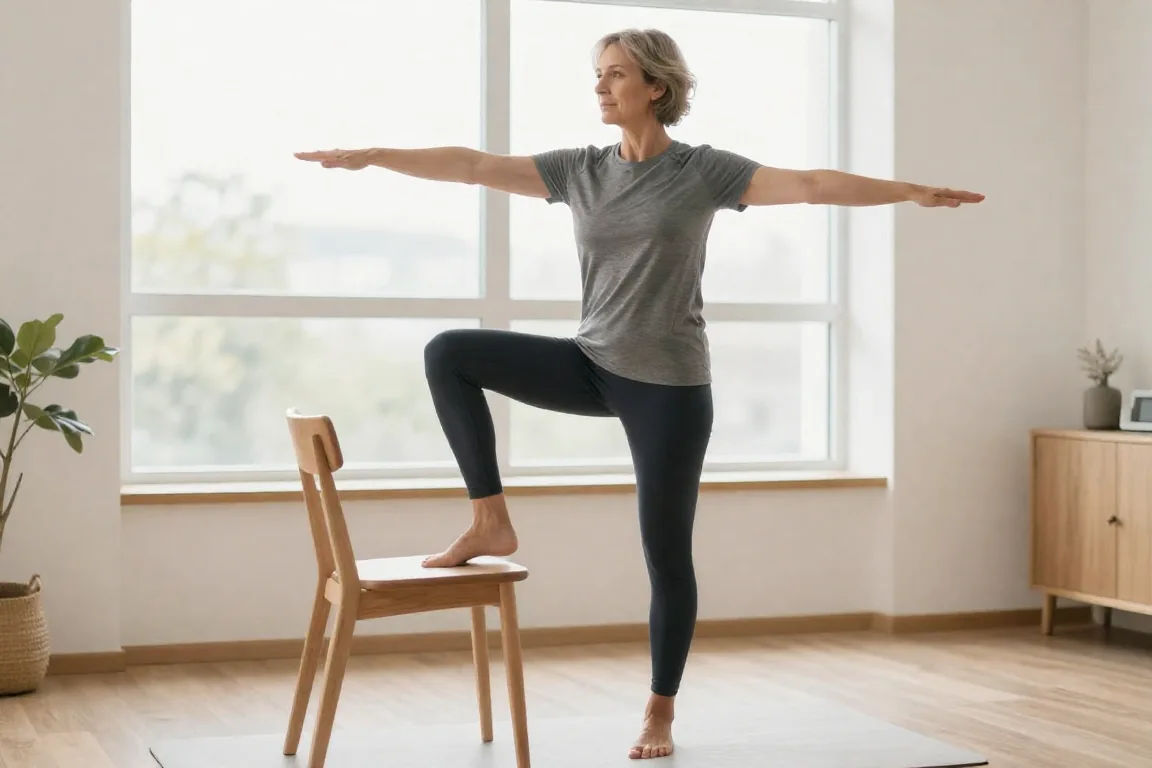
- Single-leg stands. Holding onto a sturdy chair or counter, lift one foot slightly off the floor and hold for 10 to 30 seconds, then switch sides. As balance improves, try reducing your hand support before removing it entirely.
- Heel-to-toe walking. Walk in a straight line placing the heel of one foot directly in front of the toes of the other, as if walking a tightrope, ideally along a wall or countertop you can touch if needed.
- Sit-to-stand repetitions. Rising from a chair without using your hands builds the leg strength that supports balance and is one of the most practical, functional exercises available.
- Weight shifting. Standing with feet hip-width apart, slowly shift your weight from side to side and then front to back, staying controlled rather than fast.
- Structured programs. Tai chi and community-based programs designed specifically for fall prevention (often available through senior centers or physical therapy clinics) combine several of these elements and have their own supporting research.
Start with support nearby—a wall, counter, or sturdy chair—and only progress to less support once a movement feels stable. Aim for a few short sessions a week rather than one long one, since consistency over time is what the research links to reduced fall rates. Footwear matters too: flat, supportive shoes with good grip are safer than socks or worn-out slippers during practice.
Common Mistakes and Misconceptions
One common misconception is that balance decline means a person should become more cautious by moving less. The evidence points the other way: reduced activity tends to accelerate the loss of strength and coordination that caused the balance concern in the first place, creating a cycle that is harder to reverse the longer it continues.
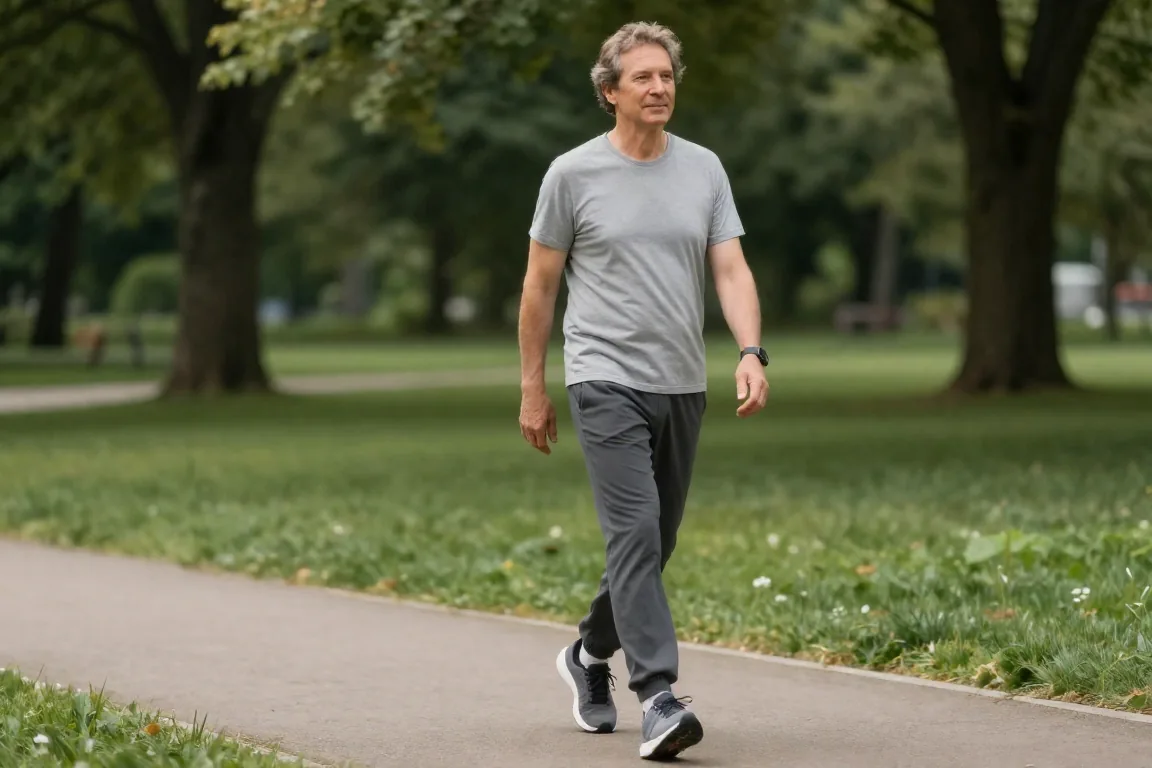
Another mistake is assuming that general activity and balance practice serve exactly the same purpose. Walking and aerobic exercise support overall health, while balance and strengthening exercises address specific abilities involved in staying steady and recovering from a misstep. A well-rounded routine can include both rather than treating them as competitors.
Finally, some people try to progress too quickly, removing all support before a movement is truly stable, which raises the very risk the exercise is meant to reduce. Progression should be gradual and should never come at the cost of a safe environment to practice in.
When to Seek Professional Help
It is reasonable to ask a doctor or physical therapist for a falls risk assessment if you have fallen in the past year, feel unsteady during daily activities, or have started avoiding certain movements out of fear of falling. A physical therapist can also identify whether a specific factor—vision, inner-ear function, medication side effects, or muscle weakness in a particular area—is contributing more than general aging, and can tailor a program accordingly.
Sudden dizziness, a fall that results in injury or that you cannot explain, chest pain, or balance loss accompanied by slurred speech, facial drooping, or sudden weakness on one side of the body are not situations to manage with a home exercise routine; they warrant prompt medical evaluation, since they can signal something more urgent than typical age-related balance change.
The Bottom Line
Balance can change with age, but it can also respond to practice. Research supports structured programs that include balance challenges, lower-body strengthening, and multicomponent exercise for community-dwelling older adults. Starting gradually, using stable support, and seeking tailored guidance when needed can make this work safer and more relevant to your mobility goals.
Sources
- Frontiers in Public Health: Effectiveness of Exercise Interventions on Fall Prevention in Ambulatory Community-Dwelling Older Adults
- Systematic Reviews: Falls Prevention Interventions for Community-Dwelling Older Adults
- National Institute on Aging: Falls and Fractures in Older Adults
Continue Your Wellness Journey
Explore our science-informed resources and discover practical strategies that may support your health goals.